Showing posts with label Germany. Show all posts
Showing posts with label Germany. Show all posts
Monday, May 8, 2017
Great Blunders of WWII: Death at Stalingrad 9
Stalingrad become Hitler's greatest blunder, after he took more and more control of the military. the initial drive into Russia went well, but fell short at the gates of Moscow. Hitler sacked his commander in chief, and took over that roll himself. The next year, the Hitler offensive headed south, to the oilfields and Stalingrad. The move south was divided in two group, Group A and Group B. The initial offensive was to Stalingrad, and then Army Group A to the south. When the Russians withdrew rather than facing the onslaught, Hitler took even more control. The effort, with the armor was focused on the move south. They were able to take the first goals, but the Russians destroyed many of the oilfields in the area. however, without most of their armor, Hitler ordered a move against Stalingrad. Without the tanks, progress was slow. The move south eventually stalled as the supply lines were too long, and they were far away from their air support.
In Stalingrad, the germans defended the city at all costs. A counterattack finally surrounded the forces there. However Hitler ordered them to remain, with the goal of their being resupplied from the air. It was impossible to get adequate supplies. Hitler put his efforts into a rescue effort to resupply. However the Russians kept up their offensive against Army Group B. The relief operation stalled before they could reach them; however the commander thought they could break out and meet the relief operation. However they followed Hitler's original orders to stay put. However shortly the Russian efforts took the airfields supplying Stalingrad, and the desperate measure to drop supplies form the air proved inadequate. What became known as the Stalingrad Pocket was doomed. Almost one hundred thousand were killed. They finally surrendered, and another almost one hundred thousand were marched into Russia. Only about five thousand would ever return.
Stalingrad was a major turning point on the Eastern Front. The Russians would be on the offensive from this point on.

Wednesday, June 8, 2016
Documentary Review: World War II in Colour: Episode 10: Closing the Ring
This is a very interesting episode, as the Russian approach Berlin from the East, and the Allies from the West. The Allies were in trouble due to no good ways to bring in supplies. The Germans had destroyed all the ports, and mined them heavily. The Allies hoped to use Antwerp, but it was heavily defended. They decided to go around, and use supply routes through Normandy, which were small, and required long distance travel. Montgomery devised Operation Market Garden, also known as "A Bridge Too Far." as an alternative. This offensive involved going around the heavily fortified Siegfried Line. It required airborne troops to capture strategic bridges, while a column of tanks would follow up and relieve them. However the last important bridge across the Rhine was not held. The British were able to capture one side of the bridge, but by the time the armored reinforcements arrived they had been forced to surrender. After this failure the capture of Antwerp became vital as the Allies were hampered by lack of supplies. Canadian troops carried this fight. It was difficult and took weeks of fighting before the Allies could bring in mine sweepers clear the port. After getting the supplies through, the weather then hampered resupply. The Allies dug in for the Winter, but Hitler had other plans. He wanted to punch through the Allied lines, and retake Antwerp and thus molest the supply lines. The Allies were caught off guard, which resulted in the Bulge in their line. However they were eventually able to hold and push back. This resulted in a great loss of men on material on the part of the germans, and in the end the line was pushed back to where they had begun. This episode talks about some of the politics involved in a war; sometimes dirty. Churchill and Stalin had divided the countries as Stalin looked more and more to having a buffer between himself and Germany. This episode showed that Stalin ordered to have his troops standby in Poland, while the Germans and the Polish Guard fought it out. Of course the Polish Guard was doomed without larger weapons. They were killed, and captured. Stalin's goal was to have Poland for Russia, and the Polish Guard was pro Western. Many people died needlessly in Poland as a result.
As they moved towards Berlin, both sides saw the Jewish Holocaust, as the Nazis grappled with the "Jewish Problem." 6 million Jews were murdered during the war.
As they moved towards Berlin, both sides saw the Jewish Holocaust, as the Nazis grappled with the "Jewish Problem." 6 million Jews were murdered during the war.
Friday, April 29, 2016
Documentary Review: WWII in Colour: episode 8: The Soviet Steamroller
In this episode we see a developing theme: The Soviets mount insurmountable forces of tanks and men, the German Generals propose retreat, Hitler refuses, after an incredible loss of men, and possibly capture, the German Generals override Hitler and retreat. This happens time and again where the German forces end up cut off, short of supplies and overwhelmed.
It shows the advance at Kirkuk, and then the Crimean Peninsula. Hitler was also notorious for not guessing correctly where the Soviets would attack next.
This film also shows the Finnish-Soviet war. I had not realized Finland in effect fought on the side of the Axis powers as a result. They were dependent on Germany for supply, and the Soviet Union had its design on Finnish territory. In the end they would claim 10 percent of Finland.
Wednesday, November 25, 2015
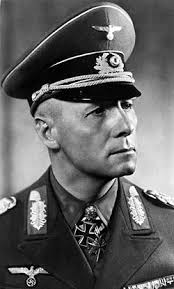
Documentary Review: Secrets of the Third Reich: Hitler's General
Subscribe to:
Posts (Atom)