Monday, November 5, 2018

Book Review: The Mormonizing of America

The Mormonizing of America: How the Mormon Religion Became a Dominant Force in politics, Entertainment, and Pop Culture by Stephen Mansfield, Worthy Publishing, Brentwood, Tennessee, 2012.
Most of this book is determined to present every anti-Mormon argument or statement ever made.  This dominated the first 220 pages, and then the last 20 pages actually dealt with the theme of the title, what about Mormonism seems to promote achievement.  The author is not a member of the Church of Jesus Christ of Latter-day Saints, and makes that abundantly clear by the sources upon which he relies. 

Thursday, November 1, 2018

Book Review: The Colorado Road: (Colorado Rail History)

The Colorado Road: History, Motive Power, and Equipment of the Colorado and Southern, Fort Worth and Denver Railways by F. Hol Wagner, Jr., The Intermountain Chapter of the National Railway Historical Society, Denver, CO, 1970.
This book is exciting for the pictures, I did not read it so much.  There are three artistic renditions of locomotives traveling through Colorado; and then hundreds of pictures of rail engines and cars and equipment.

Sunday, September 16, 2018

Early Steam Engine: The DeWitt Clinton


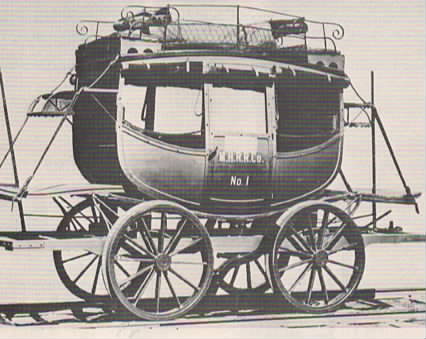
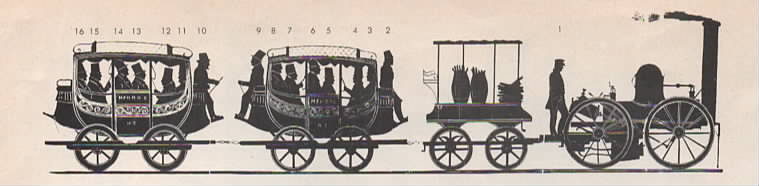
The DeWitt Clinton was not a success.  Its design had some flaws.  The engine did not provide a safe place for the engineer, who has to also stoke the boiler.  However the reason for its failure was that it was found it could not generate enough power.  It was limited in traveling below 15 miles per hour.  Its inaugural run was August 9, 1831.  It was built for the Mohawk and Hudson railroad.  The Clinton was a small engine.  There was poor draft across the fire which limited its power.  After 1831 it was overhauled.  It ran for a couple months and then was stored for the winter.  It also ran in 1832, but was scrapped after that year.  The coaches were actually stagecoaches mounting to railroad wheels.  The original having been scrapped it lives on only in  replicas.  A replica is on display at the Ford Museum.

Info gleaned from Model Railroader May 1979.

Saturday, September 15, 2018

Book Review: Brigham Young: Corageous Mormon Leader

Brigham Young: Courageous Mormon Leader, Courageous Heroes of the American West, by William R. Sanford and Carl R. Green, Easlow Publishers, Berkeley Heights, NJ, 2013.

This book gives a good overview of the life of Brigham Young, while not getting into anything controversial.  It starts with the Utah War and Mountain Meadows Massacre.  Then it goes back and tells the life of Brigham.  A little about his parents, and how Brigham Young found the gospel.  Brigham Young was called as an apostle after Zion’s Camp.  He was responsible for leading the Saints to Illinois from Missouri while the prophet Joseph Smith was at Liberty Jail.  With the death of the Prophet, the council of twelve apostles took over leadership of the church, with Brigham Young as its president.  At this time the leadership of Brigham Young was really put the test.  He had to deal with mob actions, prepare the Saints to move and the actual move West, deal with government officials which lead to the Mormon Battalion participate in the Mexican American War, determine where exactly to lead the Saints, provide food and transportation for the poorer Saints, and many other day-to-day issues.  Through all this he maintained his composure, wan lead the first wagon train to Utah.  He select4ed a temple site.  He quickly returned east, but then again traveled to Salt Lake.  The city was already well established when he returned. 
Brigham Young had many wives.  He practiced polygamy.  He established two houses in Salt Lake, the Beehive House and the Lion House for his large family.  They were met with another threat after the Civil War ended.  This was a threat from the Ute Indians warring under Chief Black Hawk.  The Mormons where active in the railroad.  Although they main line did not go through Salt Lake, Brigham Young established local lines going from the main line.  He also was active in developing sugar beets and iron factories in Utah for the benefit of the Saints.  Wallace Stegner would later call Brigham Young “a colonizer without equal in the history of America. 

Thursday, September 13, 2018

Documentary Review: ****102 Minutes that Changed America

This video begins with a warning about the graphic nature of the material.  9/11/01 8:46 New York time the first plane hit the North Tower of the World Trade Center.    This video was produced for the 15 year anniversary of the attack.This presentation is just a combination of videos and pictures from the attack, starting just before the first plane.  There is not any organized narration, just the voices of those that are on the actual videos.  Sometimes there is no sound, but most of the time the sounds of what was happening.  You hear the reaction of people to the events, the first responders directing people and news commentators talking among themselves about the scene.  There are 9-11 calls included, and police guidance. 
The most graphic scenes are after the first tower falls, and the horrendous dust cloud overwhelms people.  There are rescuers seeking water and many seeking fresh air.  Those in close apartment buildings tried to shut their windows with some success.  The dust was tremendous.  There is a brief scene with reaction from those watching on monitors at Times Square.  There was lots of anger, and many seeking revenge. 
The dust cloud scenes were repeated when the second tower fell.  What a tragic day. 

Native American Biography: Black Hawk: Ute


Black Hawk-Ute Indian Chief
When the Ute Indian Chief, Black Hawk, died on September 27, 1870 near Spring Lake and was buried by his tribe in a nearby ravine, there was laid to test a man designated by Brigham Young as “The most formidable foe amongst the Redman” that the pioneers had encountered in many years.  These words were prompted by the memory of Chief Black Hawk’s part in Utah’s worst Indian war which ended in 1867.
The war commenced in April 1865 at Manti, Sanpete County.  Three years later, when the Indians were finally brought to terms, 51 settlers had been killed and 25 settlements abandoned in 5 counties.  The seriousness of the Indian depredations was such that during the three-year war, over 4700 men of the territorial militia were called into service.  Expenses incurred during the war were in excess of one and one half million dollars.  Although scattered Indian raids continued into the summer of 1868, theBlack Hawk War was regarded as officially closed in 1867.
The years 1865 to 1867 were by far the most intense of the conflict. Latter-day Saints considered themselves in a state of open warfare. They built scores of forts and deserted dozens of settlements while hundreds of Mormon militiamen chased their elusive adversaries through the wilderness with little success. Requests for federal troops went unheeded for eight years. Unable to distinguish “guilty” from “friendly” tribesmen, frustrated Mormons at times indiscriminately killed Indians, including women and children.   Utah State Division of State History, https://heritage.utah.gov/history/uhg-black-hawk-war


Monday, September 10, 2018

Article Review: Pueblo Pottery 2000 Years of Artistry

by David L Arnold, National Geographic November, 1982.
Pottery form the Taos School of Pottery is unique and beautiful.  I just wish it weren't so expensive.